Biology, Bias & Stories – What Truly Shapes Our Brain?
 Sanna Wiker

What comes to mind when you hear “female brain”? Discover how culture, bias, and biology shape our understanding — and how stories influence us
Part 1/4 🧠Does something called “the female brain” really exist?
Theme: SEE – Uncover what has built our assumptions
What comes to mind when you hear “female brain”?
Something soft? Emotion-driven? Multitasking? Or mysterious?
What if none of that is actually true – and what if the image we carry is shaped more by culture than by science?
We all carry stories about what it means to be a woman. These stories come from thousands of years of tradition, mythology, religious texts, fairy tales and… well, pseudoscience.
And they shape how we see ourselves – and our brains.
What does the science say?
Neurologically, male and female brains are almost identical.
You cannot determine the sex of a brain just by looking at it. And the differences in volume, structure, or activity are so small that they overlap in 90–95% of cases.
So why do we believe otherwise?
The short answer: bias.
Historically, medical research has largely ignored the female body – both literally and symbolically. When female brains have been studied, it’s often through the lens of how they differ
from a male standard.
And if you go looking for differences – you’ll find them.
It’s like evaluating fish by their ability to climb trees.
Example: A room full of brains
Imagine walking into a room with 100 human brains. You’re allowed to inspect them.
Weigh them. View them on MRI.
Question: Can you tell which belonged to women, and which to men?
Answer: No. Not even the most experienced neurosurgeon could.
So what shapes women’s brains – if not sex?
Here’s where it gets interesting. The brain is plastic – shaped by what we do, think, feel, and believe.
And girls are shaped from early on by:
- How they are spoken to (“you’re so sweet,” “you’re such a good girl,” “you need to be nice”)
- What they’re allowed to play with
- What they’re expected to handle – or not
- How their emotions are interpreted (“hysterical,” “too sensitive,” “must be PMS”)
All of this creates pathways in the brain.
Not because the brain is female, but because it is human – moldable and responsive to its environment.
Final reflection
The female brain exists – but not as a biological mystery.
It exists as a mirror of society, an echo of stories, expectations, and lived context.
To understand the female brain, we must understand the whole life of the woman – from biology to bias.
Some perhaps helpful thoughts to explore:
- What ideas about women’s intellectual ability did I grow up with?
- How do these ideas affect what I dare to try, feel, or believe about myself?
- What would happen if I began to see my brain as neutral – and full of potential?
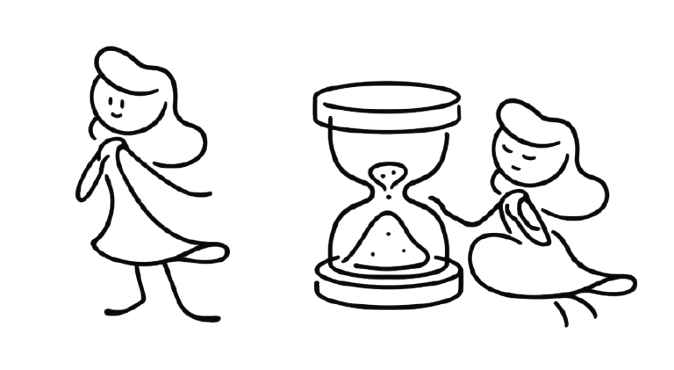
Vaka says: “Watch what you’ve been taught to believe. So much of what you call truth is simply repetition with a confident voice.”
Våga says: “Dare to challenge the stories that have shaped you. Even the ones that feel like home.”
Vila says: “You don’t have to fight to reclaim your mind. Begin by softening around what isn’t true.”
🤸♀️~It takes courage to see, and practice to grow.~🌳
Categories: : The Female Brain Series